
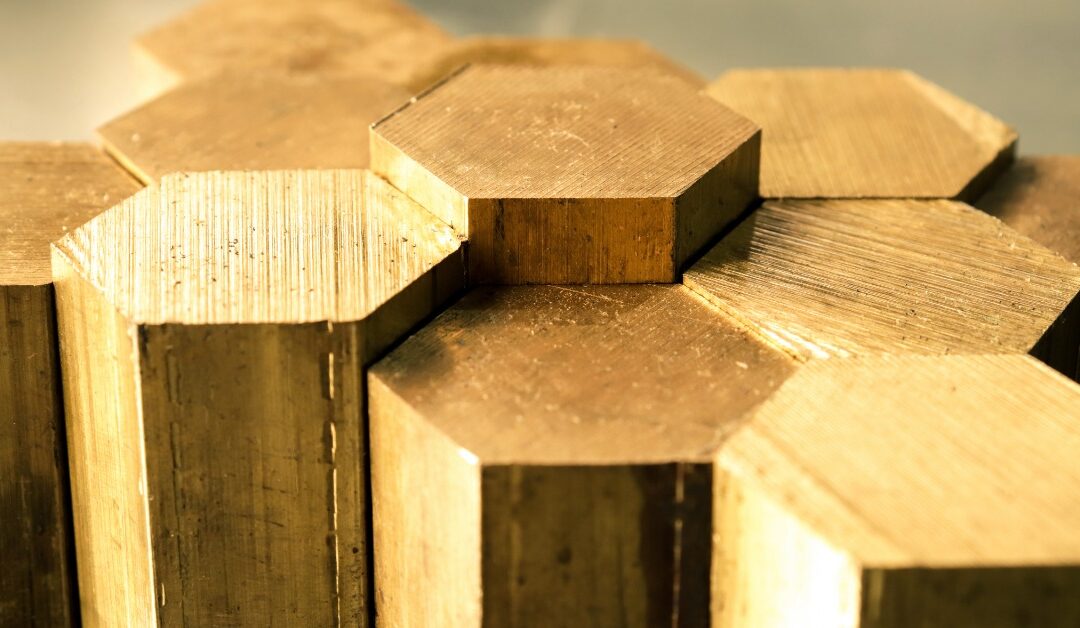
Choosing a bronze grade gets easier when you know which properties connect directly to the job. This silicon iron bronze properties guide focuses on C65620, a copper-silicon alloy associated with AMS 4616. Its chemistry supports useful strength and ductility in wrought forms. That combination makes the alloy relevant when you need dependable performance under mechanical loading.
Alloy Chemistry Makeup
When you review C65620, you’ll see copper at a minimum of 90% by weight. Silicon ranges from 2.4% to 4.0%, while iron ranges from 1.0% to 2.0%. Zinc also falls within a specified range, while manganese and phosphorus remain limited.
Those percentages help distinguish this grade from other silicon bronzes. Silicon contributes to the strength associated with the broader alloy family, while iron further separates C65620 from nearby grades. Therefore, checking the UNS number helps you avoid treating all silicon bronzes as interchangeable.
Read AMS 4616 Correctly
AMS 4616 is the SAE material specification associated with C65620. The current AMS4616H revision governs stress-relieved silicon bronze supplied in specified wrought forms. SAE identifies the nominal composition as 92% copper, 3.2% silicon, 2.8% zinc, and 1.5% iron.
When a drawing calls for AMS 4616, you should verify the required product form and revision. A material name by itself doesn’t capture every specification requirement. Additionally, specification control gives your team a clearer basis for confirming material identity.
Compare Mechanical Behavior
This silicon iron bronze properties guide also helps you put C65620’s mechanical data in context. At room temperature, its typical tensile strength is 56 KSI and a 0.2% offset yield strength of 20 KSI. Elongation is at 30%, indicating useful ductility alongside strength.
You shouldn’t treat typical values as guaranteed minimums for every piece of stock. Actual requirements depend on the governing specification and material condition. Therefore, review certification data against the drawing before releasing material for production.
Check Key Reference Values
If you need a quick screening reference, start with values published for UNS C65620. These figures help you confirm that the material under review matches the expected chemistry and general mechanical profile. They also give you a practical basis for comparing certificates.
Keep these reference points in view:
- Copper content is 90% minimum
- Silicon ranges from 2.4% to 4.0%
- Iron ranges from 1.0% to 2.0%
- Typical tensile strength is 56 KSI
- Typical elongation is 30%
Match Properties to Service
You’ll get better results when you connect alloy data to the component’s operating demands. Silicon bronze as a family offers relatively high strength and strong corrosion resistance. Many also support good weldability, so the specific grade and environment deserve careful review.
C65620 appears in bearing-related applications because its characteristics suit loaded moving assemblies. When those conditions apply, confirm the specification before comparing material forms. That keeps selection tied to the engineering requirement instead of the alloy name alone.
Choosing the right silicon iron bronze starts with matching the specification to what the finished component needs. That extra attention helps you move from a general alloy category to a material grade with clearly defined chemistry and performance expectations. Wieland Diversified supplies AMS 4616 / UNS C65620 for projects that require this specific silicon iron bronze grade. If you’re evaluating material for an upcoming component, contact us to discuss your requirements.